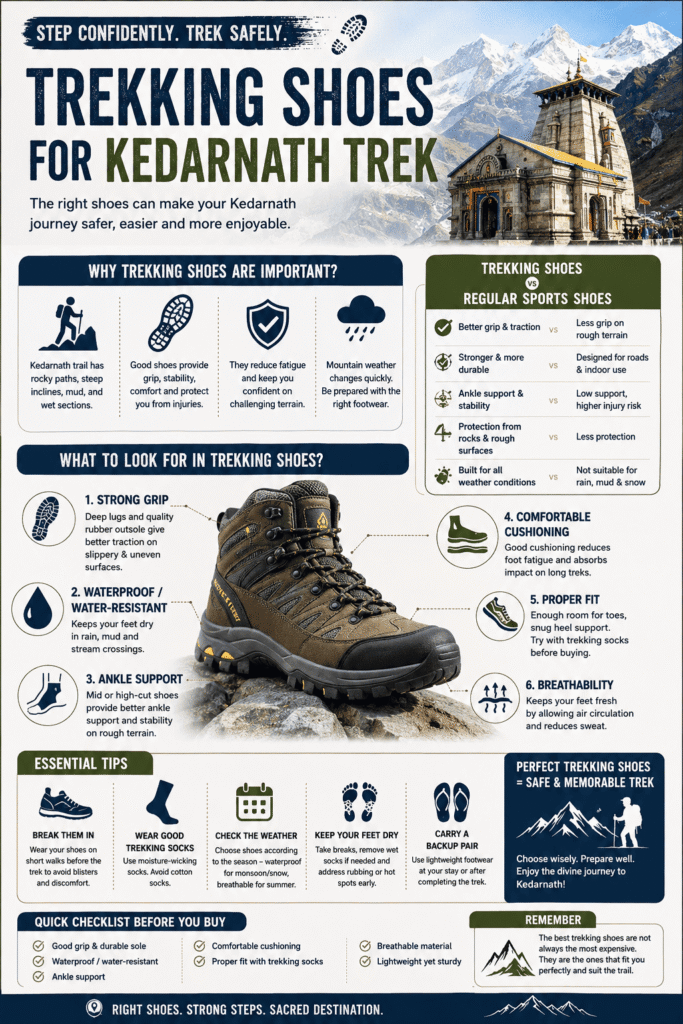

Kedarnath is one of the most beautiful and spiritually significant destinations in India. Located in the Himalayan region of Uttarakhand, the journey to Kedarnath involves a challenging trek through mountain terrain, steep sections, changing weather conditions, and uneven paths. Whether you are an experienced trekker or visiting the Himalayas for the first time, having the right pair of trekking shoes can make your journey considerably more comfortable and safer.
When preparing for a Kedarnath trek, many people focus on clothes, backpacks, raincoats, and other essentials but underestimate the importance of footwear. Your shoes are in contact with the trail throughout the journey, so choosing the right trekking shoes should be one of your top priorities.
Why Are Trekking Shoes Important for Kedarnath?
The route to Kedarnath can include rocky and uneven surfaces, muddy sections, wet patches, and steep inclines. Weather conditions in the mountains can also change quickly. Regular sports shoes or casual sneakers may not provide sufficient grip and support for such conditions.
A good pair of trekking shoes is designed specifically to handle outdoor terrain. They generally offer better traction, ankle support, cushioning, and durability than ordinary footwear.
The right shoes can help reduce discomfort and provide better stability while walking for long hours. They can also give you greater confidence when navigating uneven sections of the trail.
What Should You Look for in Trekking Shoes for Kedarnath?
Choosing trekking shoes isn’t simply about buying the most expensive pair. You should consider the features that match the conditions you are likely to encounter.
1. Strong Grip
Grip is one of the most important features of trekking shoes. Mountain trails can become slippery because of rain, mud, loose stones, or wet surfaces.
Look for shoes with a well-designed rubber outsole and deep tread pattern. A good outsole can provide better traction on different surfaces and help you maintain stability while walking.
2. Waterproof or Water-Resistant Construction
Rain and wet conditions are common considerations when trekking in the Himalayas. Wet feet can quickly become uncomfortable, particularly when you have to continue walking for several hours.
Water-resistant or waterproof trekking shoes can help protect your feet from rain and splashes. However, remember that waterproof shoes can sometimes feel warmer, so breathability is also important.
3. Ankle Support
A trekking route may involve uneven rocks and unexpected changes in elevation. Shoes with adequate ankle support can provide additional stability compared with low-profile casual shoes.
For a demanding mountain trek, many trekkers prefer mid-cut or high-cut trekking shoes because they provide additional coverage around the ankle.
4. Comfortable Cushioning
A Kedarnath trek can involve extended periods of walking. Even if your shoes have excellent grip, poor cushioning can lead to foot fatigue.
Choose trekking shoes with comfortable midsoles and sufficient cushioning. The shoes should feel supportive without being excessively heavy.
5. Proper Fit
One of the biggest mistakes trekkers make is buying shoes that don’t fit properly.
Your trekking shoes should have enough room for your toes to move naturally, while your heel should remain securely positioned. Avoid shoes that are either too tight or excessively loose.
Ideally, wear the socks you plan to use during the trek when trying on trekking shoes.
Don’t Wear Brand-New Shoes on the Trek
Even if you purchase high-quality trekking shoes, wearing them for the first time on the Kedarnath trek isn’t recommended.
New shoes can cause rubbing, blisters, and discomfort because your feet haven’t adjusted to them. Wear your shoes on shorter walks before the trek. This allows you to understand how they feel and gives the footwear time to become more comfortable.
Breaking in your trekking shoes before your journey is a simple step that can make a significant difference.
Choose Shoes According to the Weather
Mountain weather can be unpredictable. Depending on the season of your journey, you may encounter rain, cold temperatures, mud, or relatively dry conditions.
For wet conditions, prioritize water resistance and outsole grip. For colder conditions, consider shoes that offer appropriate insulation while still providing good traction.
It’s also important not to assume that waterproofing alone makes a shoe suitable for mountain trekking. Grip, fit, ankle support, and overall construction are equally important.
Trekking Shoes vs. Regular Sports Shoes
Regular sports shoes are generally designed for roads, gyms, running tracks, or other relatively predictable surfaces. Trekking shoes, on the other hand, are designed with outdoor terrain in mind.
Trekking shoes usually provide:
- Better traction
- Stronger outsoles
- Improved ankle support
- More durable construction
- Better protection against rocks and rough terrain
- Greater stability on uneven surfaces
For a demanding Himalayan trek, purpose-built trekking footwear is generally a better choice than ordinary sneakers.
Other Footwear Tips for Your Kedarnath Trek
Your shoes are only one part of your overall foot-care strategy. Carry good-quality trekking socks and avoid wearing cotton socks if your feet tend to remain damp for long periods.
Keep your feet as dry as possible and take short breaks when necessary. If you notice persistent rubbing or a hot spot developing, address it early instead of waiting for a painful blister to form.
It is also wise to carry a backup pair of lightweight footwear for use at your accommodation or after completing your day’s walk.
Final Thoughts
A Kedarnath trek is an experience that combines natural beauty, challenging terrain, and spiritual significance. The right preparation can make your journey much more enjoyable.
Among all your trekking essentials, footwear deserves special attention. Look for trekking shoes with reliable grip, suitable water resistance, comfortable cushioning, good support, and a proper fit. Most importantly, test and break in your shoes before beginning the trek.
Remember, the best trekking shoes aren’t necessarily the most expensive ones. The best pair is the one that fits your feet comfortably, provides dependable traction, suits the expected weather, and gives you confidence on the trail.
Prepare your gear carefully, choose your footwear wisely, and get ready to experience the incredible journey to Kedarnath with greater comfort and confidence.